Toru Suda works for the Tokyo metropolitan government. He is 34 years old and, on a recent day in July, showed up at the office wearing a light blue polo shirt, blue shorts and trainers. It was not a provocative choice: it was exactly what his employer had suggested.
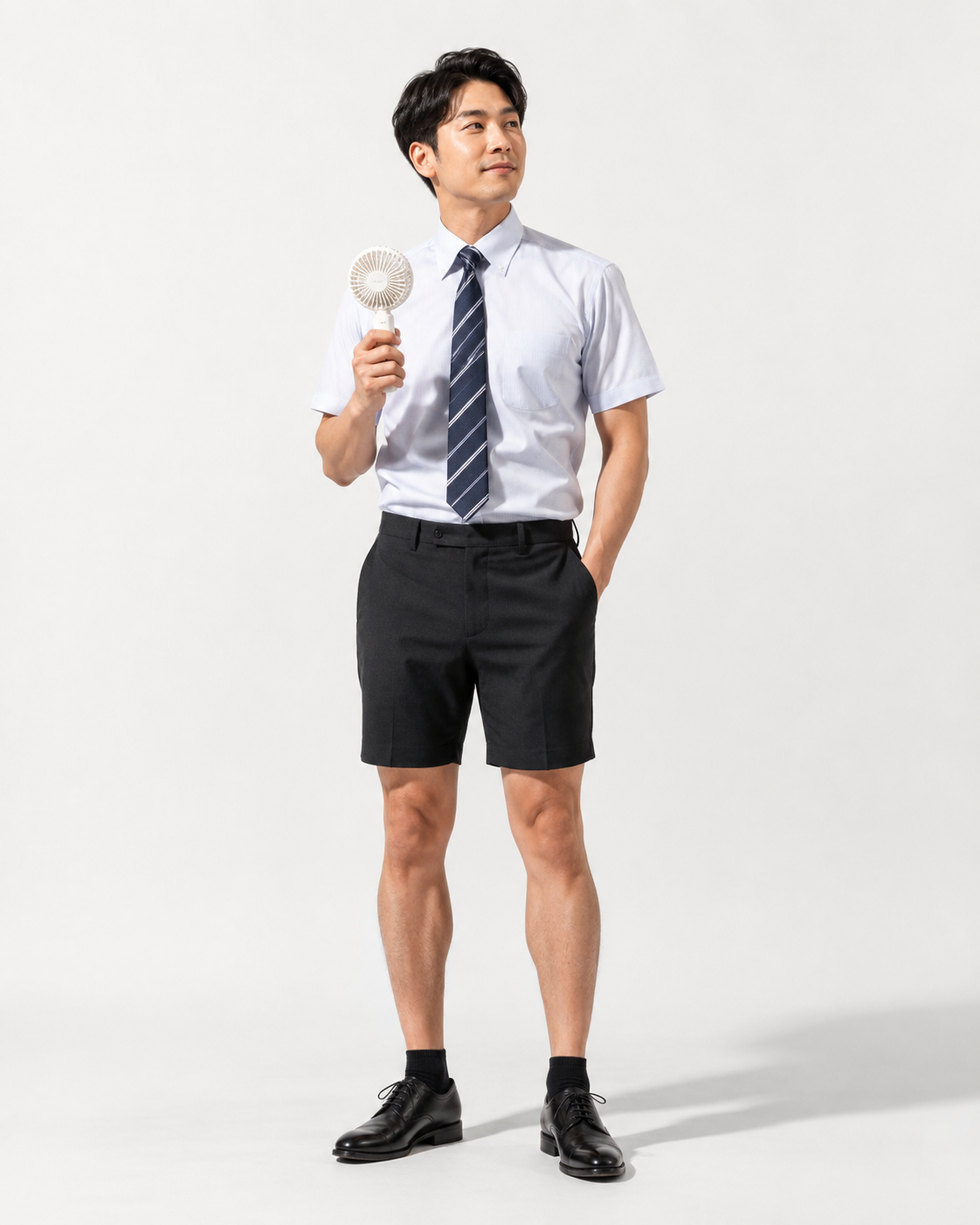
This summer the Japanese capital's administration expanded the Tokyo Cool Biz programme, inviting public employees to dress more lightly when their duties allow. Alongside the traditional tieless shirts, polo shirts, T-shirts, trainers and bermuda shorts are now permitted.
Cool Biz had been introduced by the Japanese government in 2005 to limit air-conditioning use in public buildings. The idea was simple: raise office temperatures and allow employees to shed their jackets and ties. Twenty years on, however, dropping the suit is no longer enough. Summers have grown longer and hotter, and Tokyo has decided to challenge one of the last taboos in Japanese professional dress: bare legs.
On the days the initiative was reported, temperatures in the capital had reached 35 degrees, with humidity above 70 per cent. Japan is also coming off the hottest summer ever recorded in the country, during which more than one hundred thousand people were hospitalised or treated for heat-related illness.
The change has nonetheless sparked debate. In Japan the dark suit with white shirt remains the unspoken uniform of many office workers, even in August. On social media some users mocked middle-aged civil servants in bermuda shorts; others pointed out that many women are still expected to wear tights and formal shoes. Meanwhile, some brands have begun producing office shorts in muted colours, made from crease-resistant, quick-drying fabrics.
That does not mean every official can turn up in shorts to a ceremony or an institutional meeting. The administration asks employees to judge their attire according to their role, the people they are meeting and the context.
For years, air conditioning allowed offices to ignore the climate outside and keep the same wardrobe. In Tokyo, they are beginning to do the opposite: changing what they wear because the summer has changed.


