The road to Harlem from JFK goes through Astoria, but the Knicks just won the title, the Robert F. Kennedy Bridge is closed, and we have to go south and then all the way back up Manhattan.
My driver is miserable. «Jam is crazy, bro». I, on the other hand, am happy.
There's something incredible about New York: you never get used to it. And I love that feeling — it makes me feel alive. Some people ride motorcycles, others jump out of planes. I go to New York.
In New York you understand a lot of things about the world. One of them, for instance, is that we Italians are full of bullshit.
Italy is the country I love and the place where I have my roots, but beauty — like certain combinations of chemistry and environment — can become addictive and cause hallucinations. We've convinced ourselves that we own an inconceivable share of the world's art.
We've convinced ourselves that we invented cuisine, and if we're thinking of Bottura maybe we did, but the truth is that even though we like to think Italian cooking is the only one that matters, New York has the highest concentration of Michelin-starred restaurants in the world.
When you arrive in Harlem, even the European debate on remigration starts to look provincial. For a handful of Black kids in Barriera, in Paris, or in East London we literally lost our minds and screamed invasion. We behave as though there were an original, immobile Europe that someone is coming to replace.
We're all nostalgic. Not necessarily for fascism: we're nostalgic for when Europe believed it coincided with the world. For sailing ships, explorations, cultural crusades. We'd like to ride out again on our white horse with a Goethe paperback and a bottle of Chardonnay, but we're too old. And somewhere deep down we know the world has moved on over our heads.
Now we're tourists.
We're the Dutch couple at the Bahamas resort. The German backpacker crossing South America before grad school. The Milanese art director finding herself again in Bali between a yoga session and a night under the stars with the backpacker.
We're also the European researchers, artists, and entrepreneurs who still wanted a say in a changing world and chose Princeton, MIT, Bloomberg, or Williamsburg to have it.
The spell that made Europe feel like the center of the world broke 200 years ago, when the piracy stories that shaped — and still shape — the imagination of us noble European snobs were already happening. The great stories were unfolding across the ocean and life was being forged far away. Think of what kind of alienation it must produce to live in a province of the world while still believing the province is everyone else.
But identities cause hallucinations.
The great stories, for centuries, have happened across the ocean. For some time now also across the continent, heading east.
Identities can become hallucinations. New York's, by contrast, is impossible to define. The city exerts constant pressure on each person's identity: it doesn't ask where you're from to decide where you belong. It asks what you're doing right now. It's a ruthless pressure, but also a profoundly liberating one.
My wife and I are staying at a Marriott built inside the old Victoria Theater complex, a few steps from the Apollo. We're there for two nights, before moving to the most Jewish neighborhood in Brooklyn.
We go to a bar to watch Zohran Mamdani's speech at the Knicks championship parade. She orders a Mexican Coke, I get a Corona. We order in Spanish because — in New York as in Miami, in my experience — with almost anyone working in a hotel or restaurant you can get by in Spanish.
I remember the day I sold my first company in Italy. I also remember the night I mentioned that microscopic professional achievement at a party in Manhattan. Few times have I felt so small.
An Italian exit can seem enormous right up until it's mentioned in the same room where someone is discussing an American manager's annual bonus.
Roberto Gagnor told me this fifteen years ago, during an interview: success doesn't exist, you only fail at higher levels. I was interviewing him because he'd fulfilled the dream of working for Disney and was writing Mickey Mouse stories. He had been, once again, visionary.
What is success? What is belonging? What is good food?
They're all hallucinations, in my view. But a hallucination, by its very nature, is an image the brain needs in order to give meaning to something the environment cannot naturally reproduce. It can be an oasis in the desert, or it can be the conviction that you still matter in a world happening to the west and now to the east but no longer here.
When I listen to Mamdani I think of Berlinguer. Not because they resemble each other, but because Berlinguer never governed, and precisely for that reason he could become an idol. Never having to fully reckon with power, he stayed pure. A photograph, a tie on the beach, a grave expression: perfect material for a political nostalgia that prefers the integrity of defeat to the imperfect responsibility of government.
We Italians have a soft spot for the defeated. In empathy toward those who didn't make it, we find the strength to forgive ourselves. To root for the best, you first have to accept that you're not among them.
Mamdani, by contrast, I like because he's an extremely real phenomenon. For starters, he's a mixed kid — like me, like Drake. Not being able to check a single box when US immigration asks you to indicate your race is a whole feeling.
But above all, Mamdani looks like what the world is destined to become. It's New York — capital of global ultra-finance — rediscovering the most elementary social-democratic idea: the state can intervene to soften the effects of the market.
We Europeans think that's the last advantage we have left. It's possible that in fifteen or twenty-five years that too will have shifted to the American coasts or the great Chinese cities.
Part of the game will run through artificial intelligence. Not because AI will solve everything, but because it will decide where capital, knowledge, and power concentrate. Mythos was enough to produce restrictions, geopolitical suspicion, and financial conspiracy theories. Artificial intelligence is not a technology like any other. It resembles nuclear power more than computing: it's not just a tool, it's a new way of distributing force between states and within societies.
Creating increasingly general forms of intelligence will yield sweet fruit to the communities capable of governing them, and very hard chains to those that aren't. Technology does not make you free, not necessarily. Neither does the market.
Maybe the next caravel to discover a new world will sail from Texas. Maybe the next way of being human will be tried out in Portland, Shenzhen, or a city we can't yet point to on a map.
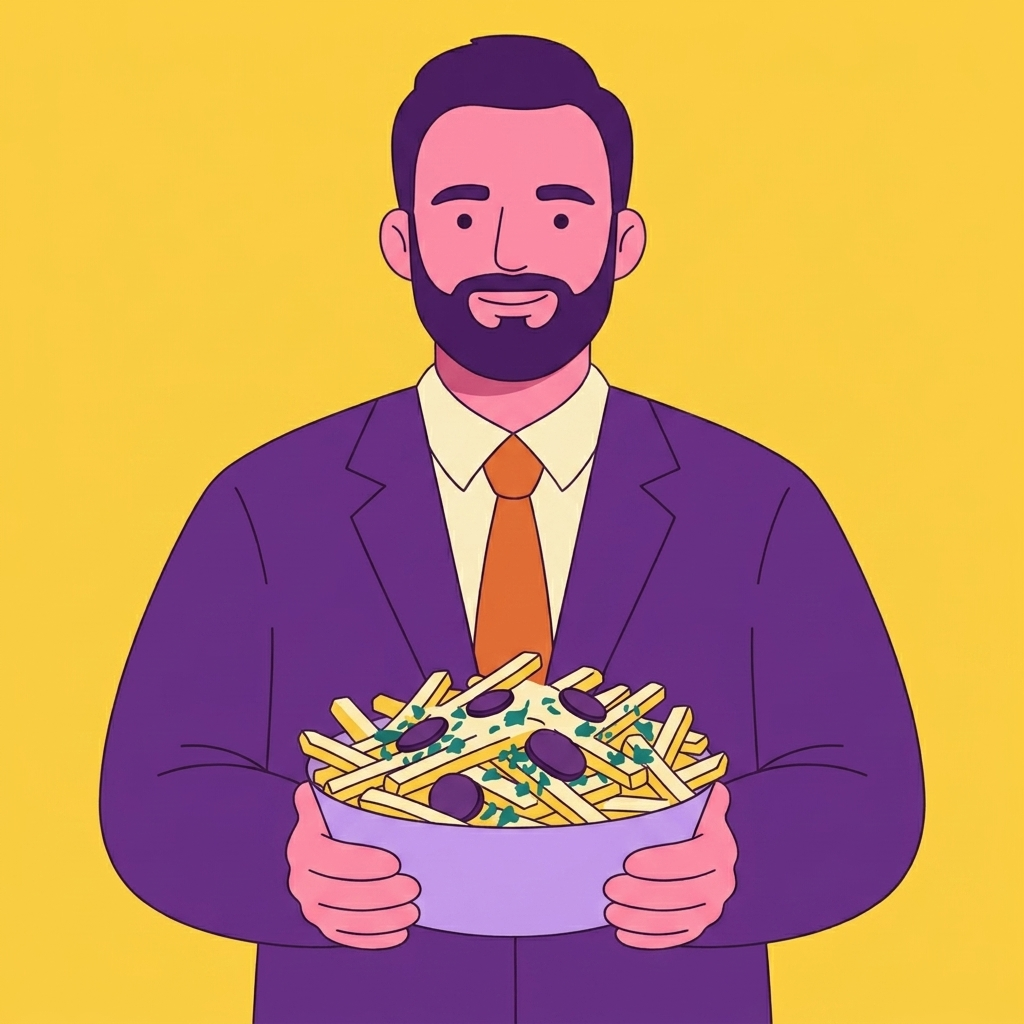
Who knows. I'm thinking about this while they bring us truffle, garlic, and parmesan fries.
I would never have ordered them in Italy.
They're the best I've ever eaten.
This is Kansei. Welcome.
It al o-B ra zi lia n au tho r, en tre pre ne ur and mu lti di sc ip li na ry thi nk er, ac ti ve acr os s ve ntu re ca pi tal, na rra ti ve, cre ati ve tho ug ht, and re sea rch on art ifi ci al in tel li ge nce.