On Monday thousands of Indian students and young people attempted to march from Jantar Mantar, the traditional protest venue in New Delhi, toward Parliament. The police had banned the march and used batons and tear gas to stop it. Around 180 people were injured in the clashes, according to the organisers. The following day the movement's leaders announced they would not organise further marches, to avoid more protesters being hurt, but that they would continue demonstrations through peaceful means.
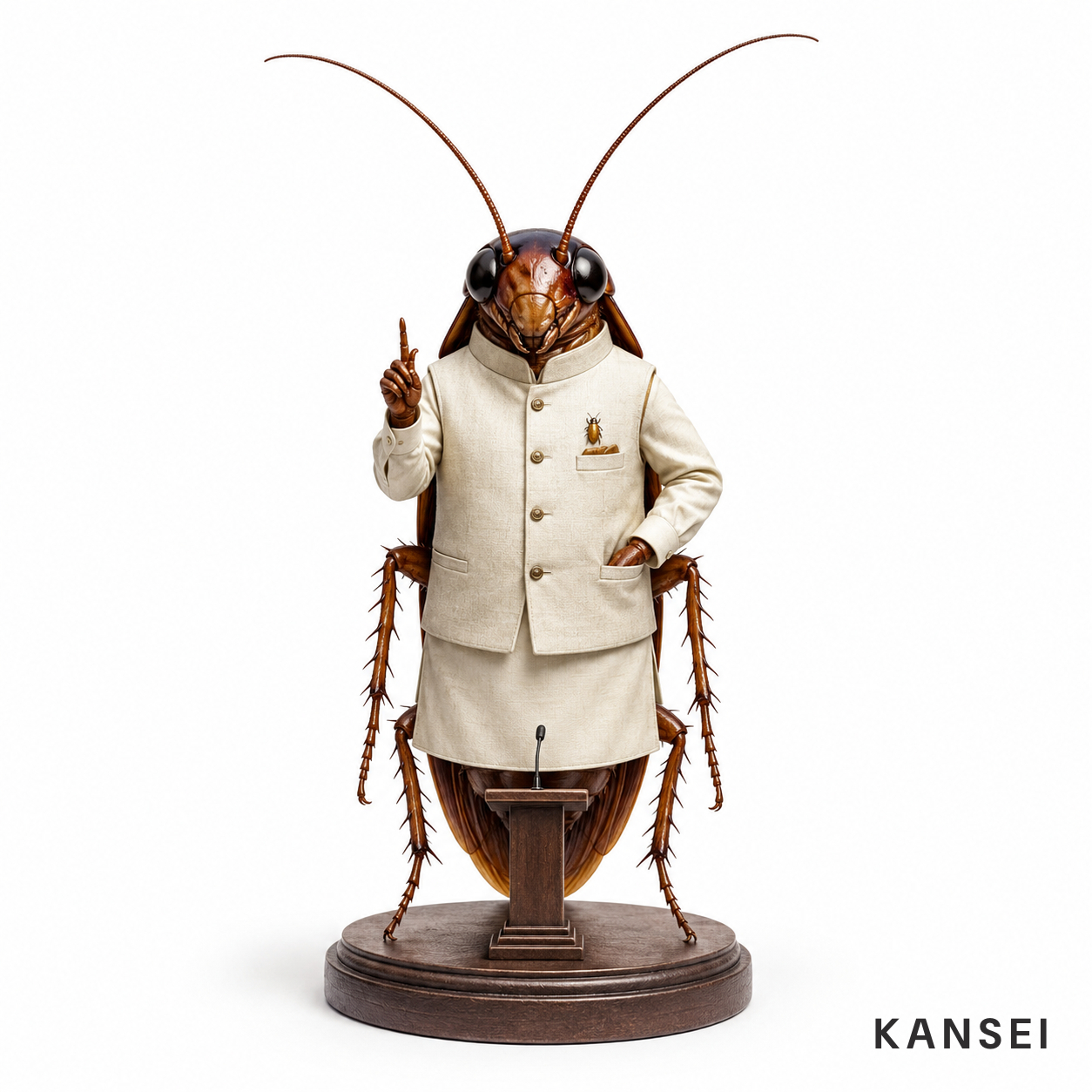
The movement is called the Cockroach Janta Party, translatable as "People's Party of Cockroaches". It is not yet a political party in the traditional sense and does not appear to be structured to contest elections: its founder, Abhijeet Dipke, has described it above all as a pressure group capable of generating a political cost for those who ignore the demands of younger generations.
It all began on 15 May, during a hearing at the Indian Supreme Court. The Chief Justice, Surya Kant, speaking about some unemployed young people in the legal sector who become activists or social media commentators and "attack the system", compared them to cockroaches and parasites. The following day Kant said he had been misquoted and argued that his criticism was directed only at people who had entered the professions through fake degrees.
The clarification did not stop the backlash. Dipke, a thirty-year-old Indian studying public relations at Boston University, posted a question on social media: "What if all the cockroaches united?" Within twenty-four hours he had created a name, a symbol, and a sign-up form for the new party. The provocation quickly gathered hundreds of thousands of sign-ups and turned an insult into a collective identity: if the institutions considered unemployed young people cockroaches, they would prove they could become a swarm.
What turned the movement into something more than a joke was above all the NEET-UG scandal — the major national entrance test for medical schools, sat this year by roughly two million candidates. In May the authorities opened an investigation into the early leak of some of the questions. India's federal police then arrested a teacher accused of having accessed the test and dictating questions and answers to a group of students before the exam.
For many young Indians the case is not an isolated one. Leaked questions, cancelled exams, the brutal competition for university places and public-sector jobs, and the difficulty of finding skilled employment have all become parts of the same problem. The Cockroach Janta Party is demanding the resignation of Education Minister Dharmendra Pradhan, compensation for the families of students who died during the crisis, and a reform of the examination system.
Following Monday's clashes, some representatives of the movement were received by Health Minister J.P. Nadda, who promised to put their demands before the government. That does not mean the "cockroach party" is about to become an electoral force, or that it will manage to sustain its mobilisation over time. It does mean, however, that a provocation born on social media has managed, in two months, to bring thousands of people to the gates of Parliament and to force a minister in Modi's government to meet their representatives.
Its strength, at least for now, lies precisely in its ambiguity. It is simultaneously a meme, a protest movement, and a possible political embryo. The ironic name makes it possible to gather under the same symbol angry students, graduates without jobs, and young people who feel unrepresented by the existing parties. The cockroaches do not yet have a full programme or a consolidated structure. But there are now enough of them to make it impossible to treat them as just a joke.


