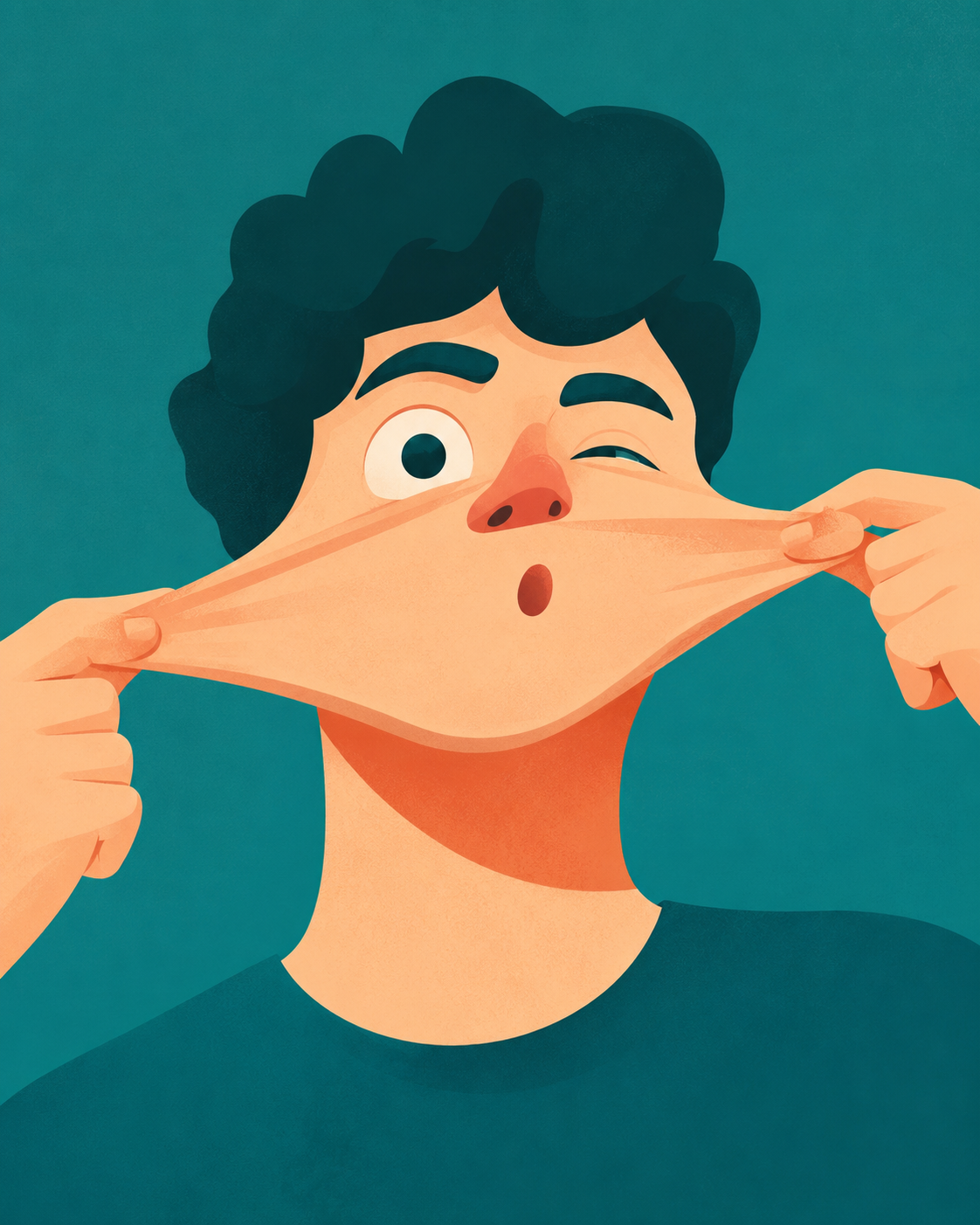
Like everyone, I look nothing like the photos I take of myself. I don’t even look like the illustration in the profile picture I use up there, which in theory is supposed to look like me. Then again, I don’t do a job where the image matters: if you want to read me it isn’t because I remind you of Brad Pitt, and if you don’t want to read me I’m afraid it isn’t down to the fact that I don’t look like him.
The problem is no longer looking like yourself. It’s looking like your publishable version.
I open any social platform and I see the TV host older than a sarcophagus who can no longer close her eyes for how tight she’s pulled, the American influencer who after redoing his nose lines up his teeth, then his ears, then who knows what else; I see Shakira at the World Cup and I read people convinced it isn’t Shakira, because she doesn’t match closely enough the mental image they’d formed scrolling her Instagram profile. It’s a devastating shock to discover that people at 50 aren’t the way they were at 30.
A friend tells me the Clavicular case is alarming — the looksmaxxing guy who goes from parties to a hospital wheelchair, promising twenty-somethings they’ll reach success with a better jawline while he wrecks his own face to prove it. He’s probably right (my friend, not the body dysmorphic). Clavicular is a problem. It’s just that I’m not sure he’s the problem we think he is.
I’m not young anymore and I won’t be swayed by a guy who, faced with going bald or becoming impotent, would choose impotence. And when they ask him to rate Jason Statham he says 8 out of 10, even though he’s bald, and the nasty interviewers shoot back: yeah, and his dick probably still works too. Strictly speaking, that’s the only part that’s coherent and legible in generational terms: why would the generation least interested in sex in history prefer an erection to hair? Hair comes out much better in photos.
The columnists already have the diagnosis ready: a dysmorphia emergency, a generation of males staring at themselves in their phones, mass narcissism. The problem with these fake narcissists is that they’ve never liked themselves so little.
For decades we found it normal that women lived ready to end up in Vogue just to work as a baker: makeup, heels, hair dye, extensions, waxing, filler, botox, dieting, skincare, surgery. Now that men are starting, and instead of breasts they redo their jaws, we cry out that it’s the beginning of the end. Maybe it is. But it’s certainly the end of that specific privilege of being able to go around scruffy and in slippers. The last remaining advantage was not having to put on makeup; now that the algorithm is pushing men’s makeup at me, I don’t feel so great.
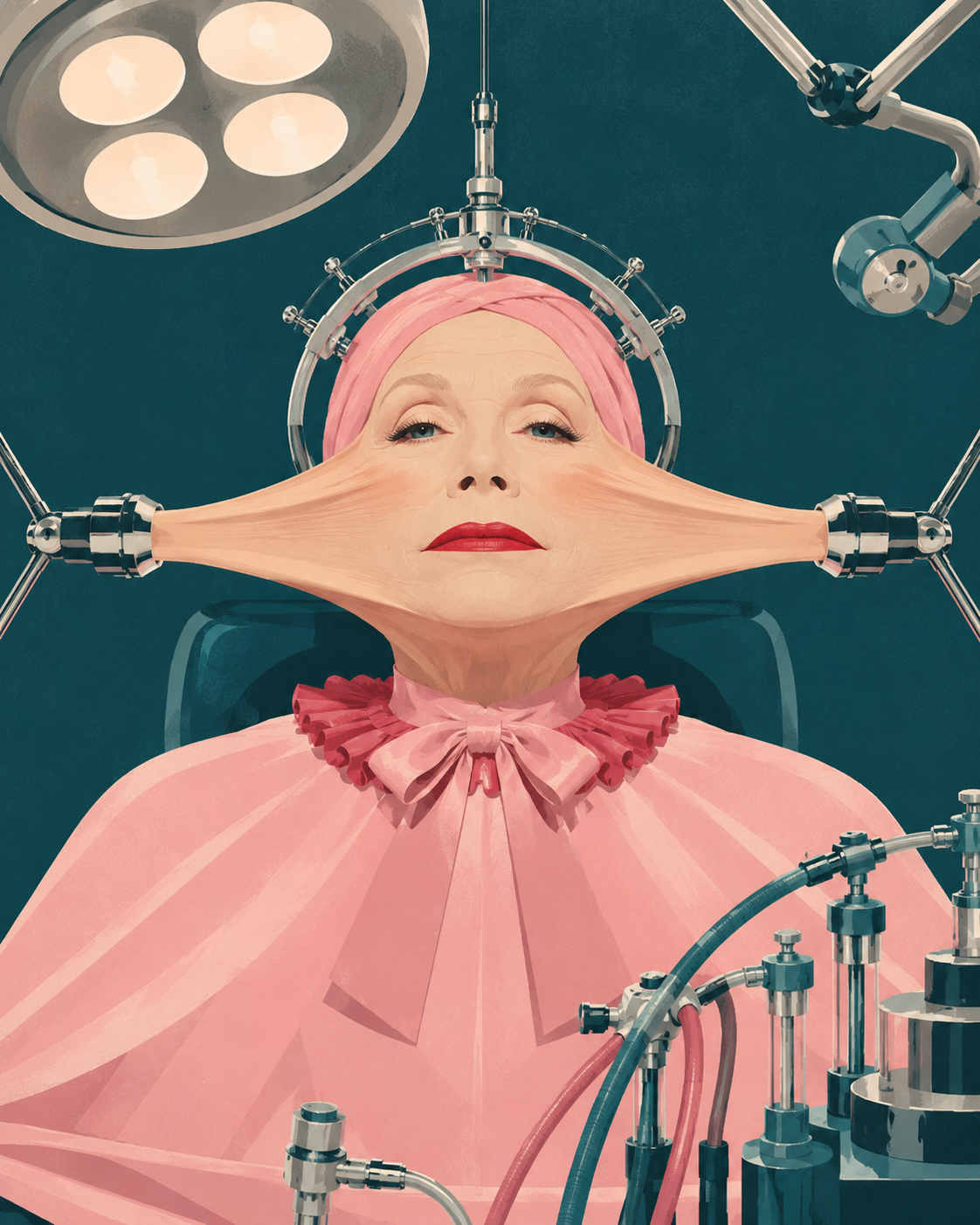
Even cinema, which is built on faces, seems to have stopped believing in them. It isn’t just that there’s no longer a Brad Pitt, a Tom Cruise, a Paul Newman, a Lauren Bacall, a Monica Vitti, a Nicole Kidman. It’s that not even Nicole Kidman looks like Nicole Kidman anymore. It isn’t (only) the fault of cosmetic surgery. I don’t want to play the moralist. A person can get as much work done as they want. Joan Rivers used to say that if you didn’t like her done up like that, it was only because you hadn’t seen her au naturel.
It’s not that contemporary actors are ugly. They’re often more handsome, more trained, more groomed, more symmetrical, more international, more photographable than the ones before (Italian actors excepted: that’s a lost battle). It’s that they seem less necessary.
You’ll tell me Chalamet is the new DiCaprio, that Jacob Elordi is the new heartthrob. And yet it seems to me the old star generated the canon. Today, instead, the actor is asked to conform to the image born in who knows which online channel, or in which surgeon’s office (Barry Keoghan knows a thing or two about it). It’ll end with us not even being able to say someone has a face like an arse. That’ll be redone too, and identical to all the others.
Lo faccio dopo