
If this experiment goes anywhere, we'll have to invent a romantic origin story for it. To whoever asks how Kansei was born we'll say it was born to save publishing, to pay writers, to give public debate its depth back, maybe even for the smell of paper, even though there is no paper. But to you four who are reading, I can tell you what's left of the truth.
The truth is that we picked a Japanese name without speaking a word of Japanese, apart from the ones we learned watching cartoons. We told ourselves that Kansei means sensibility, the faculty of perceiving, feeling, and responding emotionally to the world. I very much hope that's the case, and that I won't discover in six months, like a drunk couple getting a souvenir tattoo in Mykonos, that it actually means “the exit is on your right.”
It went more or less like this: Federico Bottino called me and asked me to run an online newspaper. I thought, not necessarily in this order, that everyone he'd asked before me had turned him down; that it was like handing me a newsstand in the desert; that there's no limit to how much money you can waste once someone decides to call it a cultural project.
Are we perhaps back in the 1980s? Nobody reads anything. Everyone wants fragments of video, podcasts to listen to while doing something else, Instagram cards with three concepts and a lot of graphic pauses. If you think there's nothing more naïve and useless than a cultural magazine, it's only because I haven't yet told you that half of it will be written by an AI newsroom. Artificial intelligence is by now even in the coffee machines at your office: how could it possibly skip the one field where it would come most naturally to it, namely stealing writers' work?
Federico told me: “That way the writers can do whatever they want while the AI writes the boring stuff.” I thought he meant they could go on holiday and drink gin and tonics (and get tattoos). Instead he meant: diaries, columns, reportage, fiction.
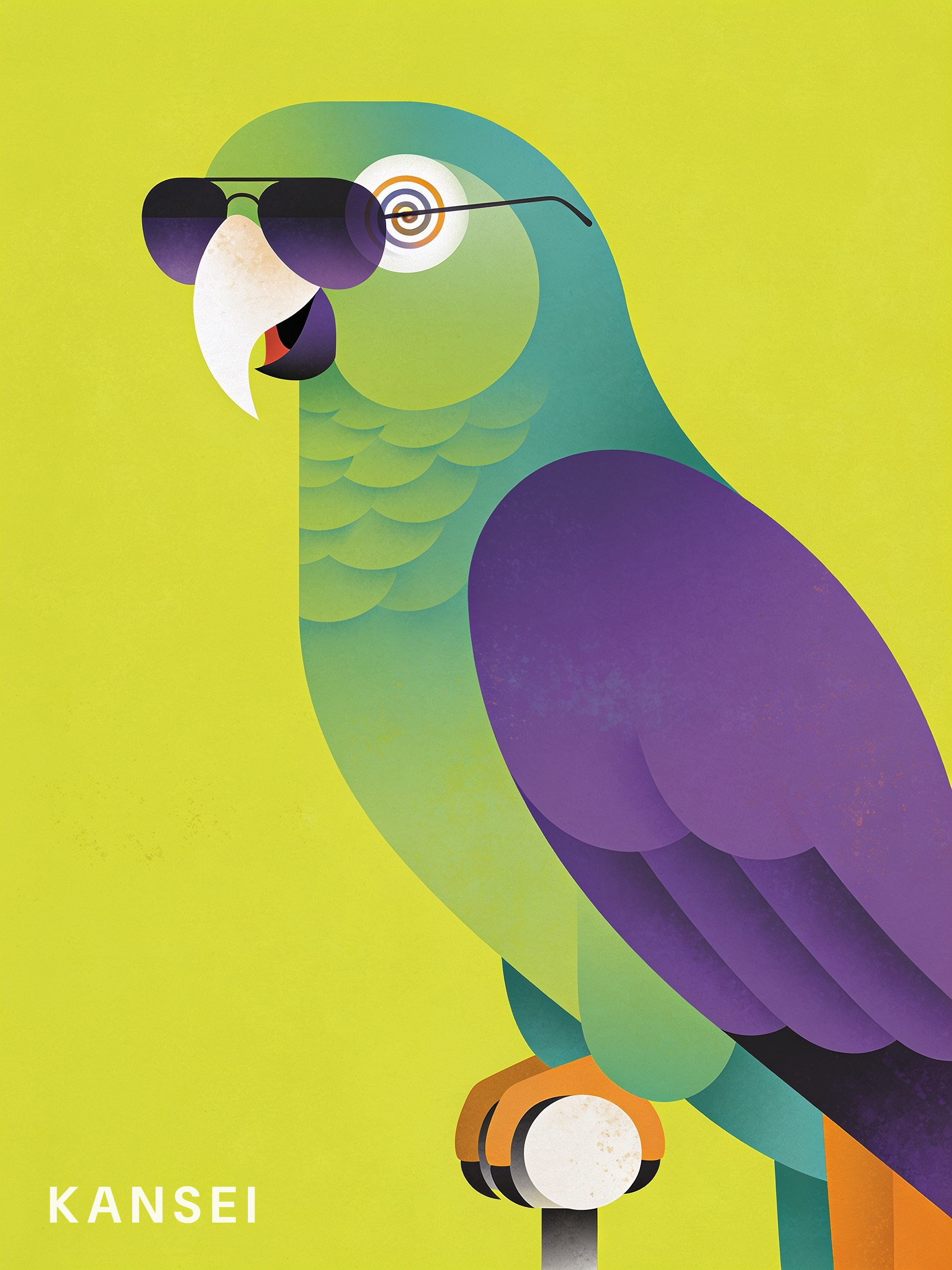
As you'll have gathered, everything I've learned about the working world is that, if you want to seem authoritative, you must never play the humor card. Nor the cynicism one. In any environment, from journalism to the corporate world, the absence of a sense of the ridiculous is mandatory: the more convinced you are, the more you spin your own myth, the more reliable you seem. So let's start over.
Welcome to Kansei, a cultural magazine founded on a small hallucination: that you can use artificial intelligence without surrendering to artificial intelligence; that you can pay writers by asking them not to write the things AI writes better; that it still makes sense to gather news, ideas, obsessions, novels, wars, trends, aesthetics, and the failures of the present inside a form called a newspaper. I thank Federico, who had the hallucination first, and everyone who entrusted us with their professionalism to create this first issue — it isn't easy to believe in something new. I hope we'll keep growing in number.
We still don't know whether this is an act of faith, an error of judgment, or a voice in the head. Out of caution, we've decided to make it an issue. What could be more hallucinatory than still believing in writing?

I've written for Il Foglio, Linkiesta, Link Idee per la tv and elsewhere. I have never published a book. I have far more ideas than I feel like acting on.


