KANSEI

AI Observatory

Capabilities, profits, the bubble.
Tracking the data and the promises.

The CEO promises
1,347

days since this early AI bubble debate.
TechCrunch · January 5, 2023

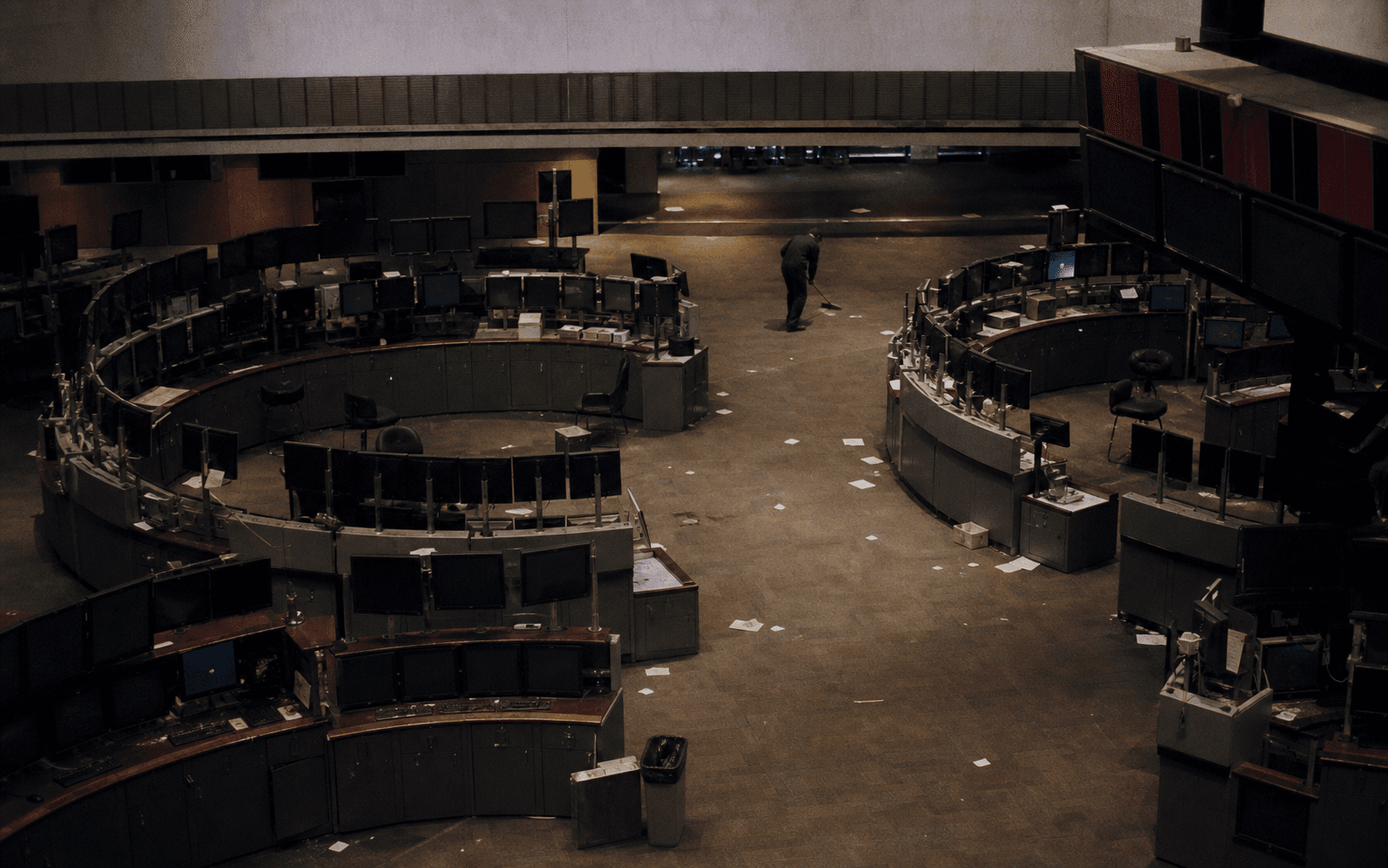
A maintenance worker sweeps papers from the floor of a stock exchange after closing
Digital illustration by Kansei

The people making the promises

The inflated CEOs

Select a CEO: their statement, date and source appear below the balloons.

Swipe to see them all →

Sam Altman / OpenAI

It is possible that we will have superintelligence in a few thousand days (!)

September 23, 2024

«The Intelligence Age»

Original statement · not a verified result

Explore the evidence

01 / AGI

Capabilities put to the test.

Two tools for tracking progress towards more general capabilities. Neither certifies AGI on its own.

METR · Time Horizon 1.1

Which software tasks can it complete?

METR gives AI agents programming, machine learning and cybersecurity tasks. Difficulty is expressed as the time a human expert would need: the hours in the chart are not the AI’s running time.

Tasks the agent is predicted to complete 5 times out of 10. Longer bars mean harder tasks.

Human expert time · linear scale
GPT-44 min
Claude 3.5 Sonnet (Jun 2024)11 min
Claude 3.7 Sonnet1 h 0 min
o32 h 0 min
Claude Opus 4.54 h 53 min
Claude Opus 4.611 h 59 min
GPT-5.3 Codex5 h 50 min
Gemini 3.1 Pro6 h 24 min
GPT-5.45 h 42 min
Claude Mythos Preview (early)17 h 25 min *

* Estimates above 16 hours are unreliable; bars stop at 16 h. Selection of 10 models, ordered by release date. Same TH 1.1 benchmark.

Uncertainty and exact values

Estimates have uncertainty: the ranges below are the intervals supplied by METR. Model and agent tools are evaluated together.

GPT-4 · 2023-03-14
2 min8 min

Claude 3.5 Sonnet (Jun 2024) · 2024-06-20
5 min22 min

Claude 3.7 Sonnet · 2025-02-24
33 min1 h 44 min

o3 · 2025-04-16
1 h 15 min3 h 11 min

Claude Opus 4.5 · 2025-11-24
2 h 42 min10 h 24 min

Claude Opus 4.6 · 2026-02-05
5 h 17 min60 h 34 min

GPT-5.3 Codex · 2026-02-05
3 h 15 min13 h 36 min

Gemini 3.1 Pro · 2026-02-19
3 h 54 min11 h 35 min

GPT-5.4 · 2026-03-05
3 h 7 min12 h 49 min

Claude Mythos Preview (early) · 2026-04-07
8 h 29 min55 h 4 min

Original dataset

METR warns that measurements above 16 hours are unreliable with its current suite. These percentages do not measure proximity to AGI.

METR source and method

Page updated 8 May 2026 · accessed 4 Sep 2026
ARC Prize

Can it infer an unfamiliar rule?

In ARC-AGI-1 and 2, AI studies examples of coloured grids, infers the transformation and applies it to a new grid. ARC-AGI-3 changes the test: an agent explores an unfamiliar game and must learn how to solve it.

Percentage of grid puzzles solved correctly. 100% means every puzzle in this test, not every possible reasoning problem.

Puzzles solved · cost per puzzle
GPT-6 Astra (Max)95%
$1.12 / puzzle
GPT-5.6 Sol (Max)92.5%
$1.44 / puzzle
Claude Opus 5 (Max)90.42%
$2.06 / puzzle
Claude Fable 5.1 (XHigh)90%
$3.12 / puzzle
Claude Fable 5 (Max)89.17%
$5.45 / puzzle
GPT-5.5 (XHigh)85%
$1.87 / puzzle
Gemini 3.7 Flash (High)84.58%
$0.25 / puzzle
GPT-5.5 Pro (High)84.58%
$10.51 / puzzle

Top 8 model groups: highest-scoring configuration for each, with its cost. Semi-private evaluation set.

Different versions do not form a single series. Preview results are provisional.

ARC Prize source and method

Dataset retrieved 4 Sep 2026 · manually curated updates

02 / Profits

Is AI making money?

Microsoft, Meta and Amazon are profitable. Their accounts do not separately report how much of that profit comes from AI.

April–June 2026 · entire companies

Revenue minus operating costs gives operating profit, before interest and taxes. The figures include all businesses, not just AI.

Microsoft

Revenue
$90 bn
Operating costs
$49.4 bn
= Operating profit
$40.6 bn

Of every $100 in revenue, about 45 as operating profit.

Quarterly results

Meta

Revenue
$60.8 bn
Operating costs
$42 bn
= Operating profit
$18.8 bn

Of every $100 in revenue, about 31 as operating profit.

Quarterly results

Amazon

Revenue
$200.6 bn
Operating costs
$173.1 bn
= Operating profit
$27.5 bn

Of every $100 in revenue, about 14 as operating profit.

Quarterly results

And AI on its own?

These reports do not provide a separate AI income statement. Cloud revenue, AI sales announcements and spending plans cannot tell us its net profit. Missing data does not mean zero profit.

How much cash is left after investment?

Profit and cash are different measures: equipment is paid for now, but its cost is spread over years in the income statement. Free cash flow measures cash remaining after investment. The company definitions and periods below differ.

Microsoft: where the cash goesApril–June 2026 · whole company
Cash from operations$55.4 bn
Cash paid for property and equipment$35.8 bn
Remaining free cash flow$19.6 bn

55.4 − 35.8 = 19.6 billion. The figures do not separate AI from other activities.

Microsoft · FY26 Q4 · 29 Jul 2026

Checked:

Microsoft

$19.6 bn

Free cash flow · Apr–Jun 2026 · quarter

Does not isolate the return on AI.

Scope and source

Whole company. Operating cash flow less cash paid for property, plant and equipment.

Microsoft · FY26 Q4 · 29 Jul 2026

Checked:

Meta

$784 m

Free cash flow · Apr–Jun 2026 · quarter

Definition differs from Microsoft’s. This is not an AI margin.

Scope and source

Whole company. Also deducts principal payments on finance leases.

Meta · Q2 2026 · 29 Jul 2026

Checked:

Amazon

−$7.6 bn

Free cash flow · Jul 2025–Jun 2026 · 12 months

Not directly comparable with the quarters above.

Scope and source

Whole company, not just AWS. Trailing twelve months ended June 30.

Amazon · Q2 2026 · 30 Jul 2026

Checked:

Checked: 4 Sep 2026 · Company quarterly reports. Values rounded.

03 / Bubble

Signals of a bubble.

Valuations, concentration, earnings and cash flow help show how fragile the market may be. They cannot predict the day of a crash.

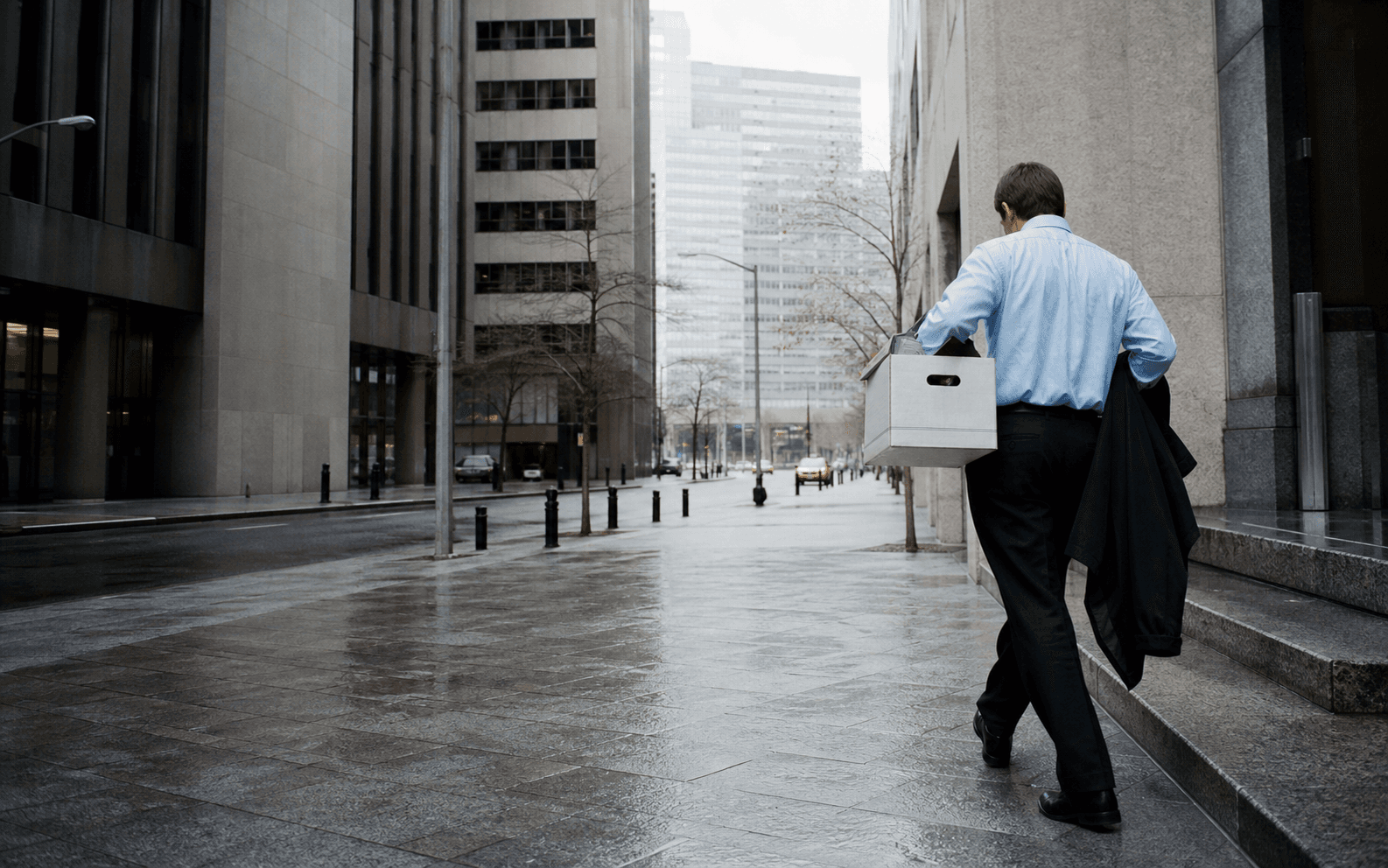
A finance worker carries a box away from an office building on a grey day in Manhattan
Digital illustration by Kansei

Existing dossier · reviewed 3 Sep 2026. Sources cover different periods; these are not live market quotes.

Market indicators and interpretations

01 / Signal

78 / 66 / 71

The market increasingly depends on AI

Since ChatGPT launched, 42 AI-linked stocks have produced 78% of the S&P 500’s rise, 66% of its earnings growth and 71% of its capex and R&D growth. Without them, J.P. Morgan calculates, the index would have underperformed Europe, Japan and China.

02 / Analysis

MAG 7 ↘

The mega-cap premium is compressing

Apollo finds that Magnificent Seven earnings growth is converging toward the rest of the index while hyperscaler free cash flow is declining.

03 / Analysis

STOCK ≠ INDEX

The answer is not simply selling the index

Schroders sees signs of froth but argues for managing risk stock by stock: selectivity and diversification, not a binary prophecy.

04 / Analysis

DATA ≠ DATE

High valuation is not a certain date

Historical data links high valuations to lower expected returns. Their relationship with the exact timing of a correction remains weak and noisy.

05 / Signal

$720-745B

Investment and revenue: different scopes

The 2026 guidance collected in this dossier for Amazon, Alphabet, Meta and Microsoft totals $720–745 billion. This is overall investment, not an annual AI expense. Company-reported AI revenue run rates and group cash flow do not establish AI profitability: periods, scopes and lease treatment differ. See Profits for company-level figures.

Interpretations: market rotation and alternative views

The rotation described in summer 2026

Analyses collected between May and July 2026 described the rest of the S&P 500, small caps and value stocks catching up with the Magnificent Seven. Yardeni’s year-end target of 8,250 was a forecast, not an outcome. The sources document that market interpretation.

The opposite reading of the data

Not every analysis reads the current cycle as an already-formed bubble. These views do not erase the risk; they explain why comparisons with 2000 may be incomplete.

Goldman Sachs

Prices have risen alongside earnings, not solely through higher multiples. The risk of a pure valuation bubble appears lower than in 1999; the remaining risk is that markets overestimate how long exceptional profits can last.

Goldman Sachs Research · July 10, 2026

Morgan Stanley

Morgan Stanley rates hyperscalers among the most creditworthy issuers the market has ever seen: the risk lies in the quantity of debt to absorb, some $250 billion of AI-related issuance in the first half of 2026 and $500 billion expected for the year. The house base case is 1997-1998, with spreads widening modestly.

Morgan Stanley Research · June 18, 2026

J.P. Morgan

Data-center capacity did not yet show the excess typical of a mature bubble: vacancy was 1.6%, with three quarters of new capacity pre-leased. J.P. Morgan judged the risk of a future bubble forming to be greater than the risk of already being at its peak.

J.P. Morgan Private Bank · December 12, 2025

Manually updated. Financial records show source, period and check date; the analyses in this dossier retain their original dates. A new check does not change the data period.

If a data point cannot be verified, it is not published. If you spot an error, let us know at redazione@kanseimagazine.com and we will correct it.

Editorial and informational content. This is not financial advice or an invitation to buy or sell financial instruments.

Every bubble burst

Market archive / 1637—2023 Documented series
20×95%1637Dutch Tulips19×90%1720MississippiBubble8×83%1720South SeaBubble6×89%1929RoaringTwenties6×82%1989JapanNikkei 19895×78%2000Dot-comBubble2×35%2007US Housing200813×77%2021Crypto 2021Editorial monitoring2023AI 2023–?
risecrashHover or tap for data

After 1929, the Dow Jones took 25 years to surpass its previous peak. After 1989, the Nikkei took 34. Tap each curve to compare the rise, crash and recovery.

The curves are schematic, not price series. Markets, periods and recovery criteria differ: the percentages do not measure the probability of an AI bubble. Each episode is sourced above.

Predictions without a clock

They call it a bubble, but never say when. Without a date, the prediction cannot be tested.