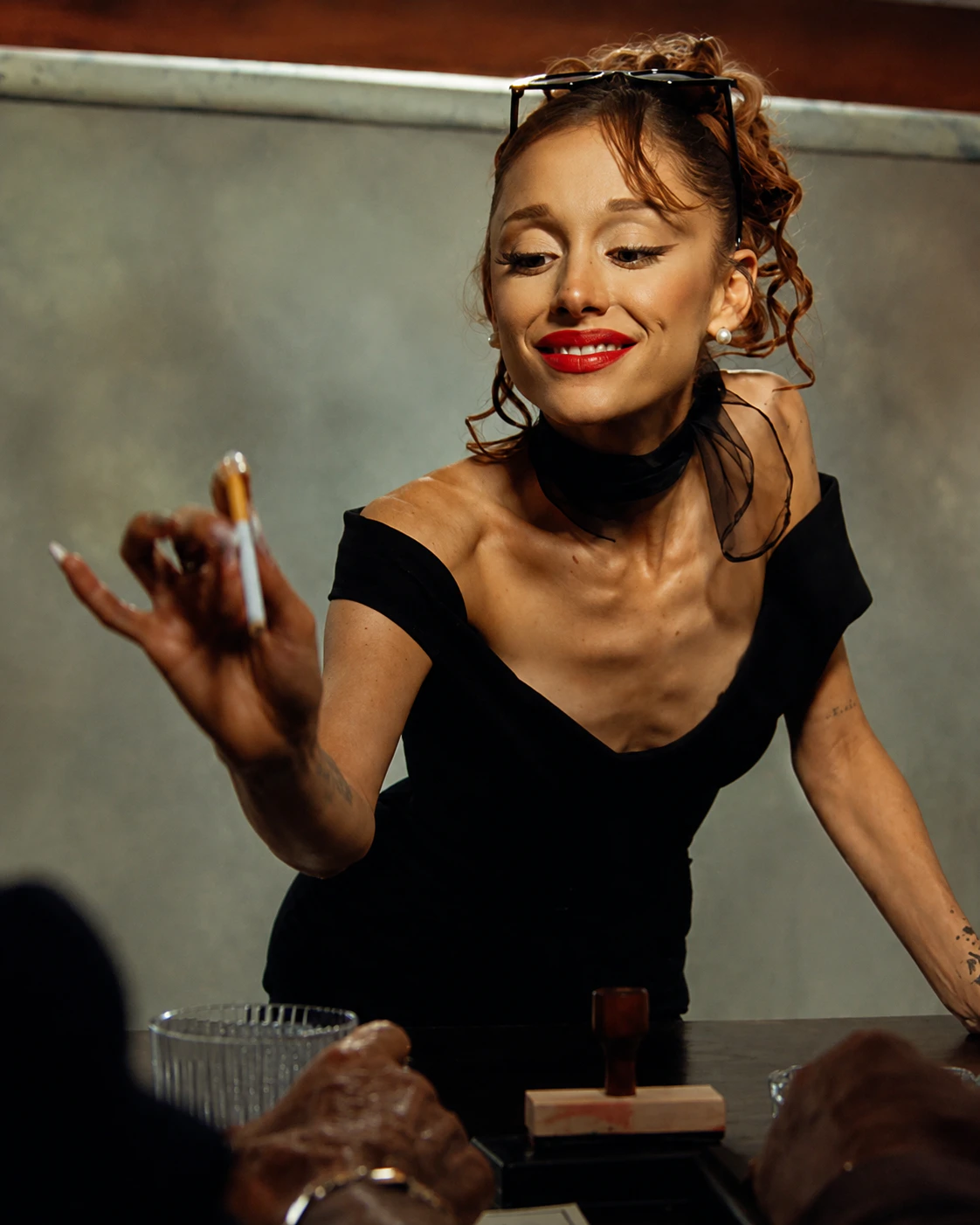
Ariana Grande looks very thin in the video for "petal," her latest single, and within days many people noticed. At the Seebad where I swim in summer, meanwhile, the same scene plays out every year: two hundred half-naked people spend two hours looking each other over while pretending to read. Nobody says anything. You look, form a hypothesis, file it away; then you dry off, get on your bike, head home, and whatever you thought about the woman on the towel next to you will never be known by anyone — yourself included — because by evening you've forgotten it.
Judging bodies is the oldest thing we do, and we do it without deciding to: the mind produces the hypothesis before you have time to choose whether to produce it. Asking an audience not to judge a body is like asking it not to see one.
On the hypothesis, though, we are terrible. In 2023 Grande explained that the body people were favourably comparing her to — the one that looked healthy to everyone — belonged to the worst period of her life: she was unwell, and nobody had noticed, because she was unwell in a way that didn't show. The collective certainty of that moment was identical to today's and pointed in the opposite direction. How she is now I don't know, and neither does anyone writing about it, myself included.
A concern, moreover, can be genuine and still cause harm. Those are two separate matters, and treating them as one is the fastest way to deal with neither.
Kafka wrote a story about a man who fasts inside a cage for a living, and the public pays admission to watch him. What interests me about the story isn't the fasting, which is the part everyone quotes. What interests me are the guards: the spectators appoint certain ones to make sure the hunger artist doesn't eat in secret at night, and those men sit there and stare at him. It is total attention with zero responsibility for another human being, and not the slightest intention of helping him. The hunger artist, in the end, dies while no one is watching any more.
Care, unlike interest, has requirements. Someone close to you can listen, can insist, can insist in the wrong way, can pay the price for it, and still be there the next day. Under the video for "Petal" there are two comments written by people who say they have had an eating disorder, and they say the opposite of each other: in the first, someone who pushed saved a life; in the second, the strangers who thrust food at her on the street when she was fourteen only humiliated her and delayed her recovery. In both cases someone insisted. What differs is who was in the room.
A single comment weighs nothing, and that's the argument we all use to absolve ourselves — taken one at a time, it's even true. Thousands together become something else: pressure, trend, news, and eventually articles like this one. At the top of that video's comment section the most-liked comments are all kind; further down, where nobody looks, are the insults, and someone has reposted that image tagged thinspo — the term pro-anorexia forums use for material to keep within reach as encouragement. Between the two layers the tone changes; the act does not.
And here you are, because I'd wager that while reading you did what I did: you went to look for the image, to see for yourself how serious it was (but we've put it here for you).
A right not to be interpreted doesn't exist and couldn't, and one of the most-liked comments says it in four words: «nobody should assume anything about her body, but come on, I have eyes». The workable boundary comes in what follows, and it consists of not treating the impression of being right as authorisation. Grande has announced she will step back from the spotlight after the tour, describing the decision as one she made some time ago; building a chain of causation on top of that would be yet another assumption about someone's life.
At the Seebad, in August, among those two hundred people looking each other over, some are genuinely struggling — statistically, more than one. Nobody will know. And not out of cruelty: in there I have none of what it would take — I don't know that person, I don't know what has happened to them, I won't be there tomorrow, I can't stay if they get angry. I have eyes and a towel.
Under a video I also have a text field.